


What is Color Correction and Why Do You Need It?
Color correction is a professional service performed to neutralize, modify, or eliminate an unwanted hair color. This often results from a failed at-home dye job, uneven bleaching, or color that has faded to a brassy or greenish tone.
When is Correction Necessary?
A color correction is more than just "re-dyeing." It is necessary when:
- The color is streaky or uneven: You have dark and light patches (banding).
- The tone is too warm (orange/yellow/brassy): Common after attempting to go blonde at home.
- The tone is too cool (gray/green): Common when applying ash tones over very light bases.
- You want a drastic change from dark to light: This requires removing artificial pigment first. # The 3 Pillars of the Correction Process The path to the perfect color is based on color science. The professional stylist follows one or more of these steps: ### 1. Pigment Removal or Reduction (Controlled Lightening)
- Objective: To remove or lighten the unwanted color (whether natural or artificial).
- Process: Specialized products (color remover or de-colorizer) are used to dissolve artificial pigments. In severe cases, controlled bleaching is required to lift very dark tones or color bands. ### 2. Color Repositioning (Pigment Filling)
- Objective: To reintroduce the warm tones (reds and golds) that were lost or removed in Step 1, before applying the final color.
- Process: This is essential when going from a very light blonde back to a brown shade. Applying a dark tone directly over bleached hair can result in a green or dull color. "Filling" ensures the new color looks vibrant and natural. ### 3. Neutralization and Final Toning
- Objective: To apply the desired color and correct any residual unwanted undertones.
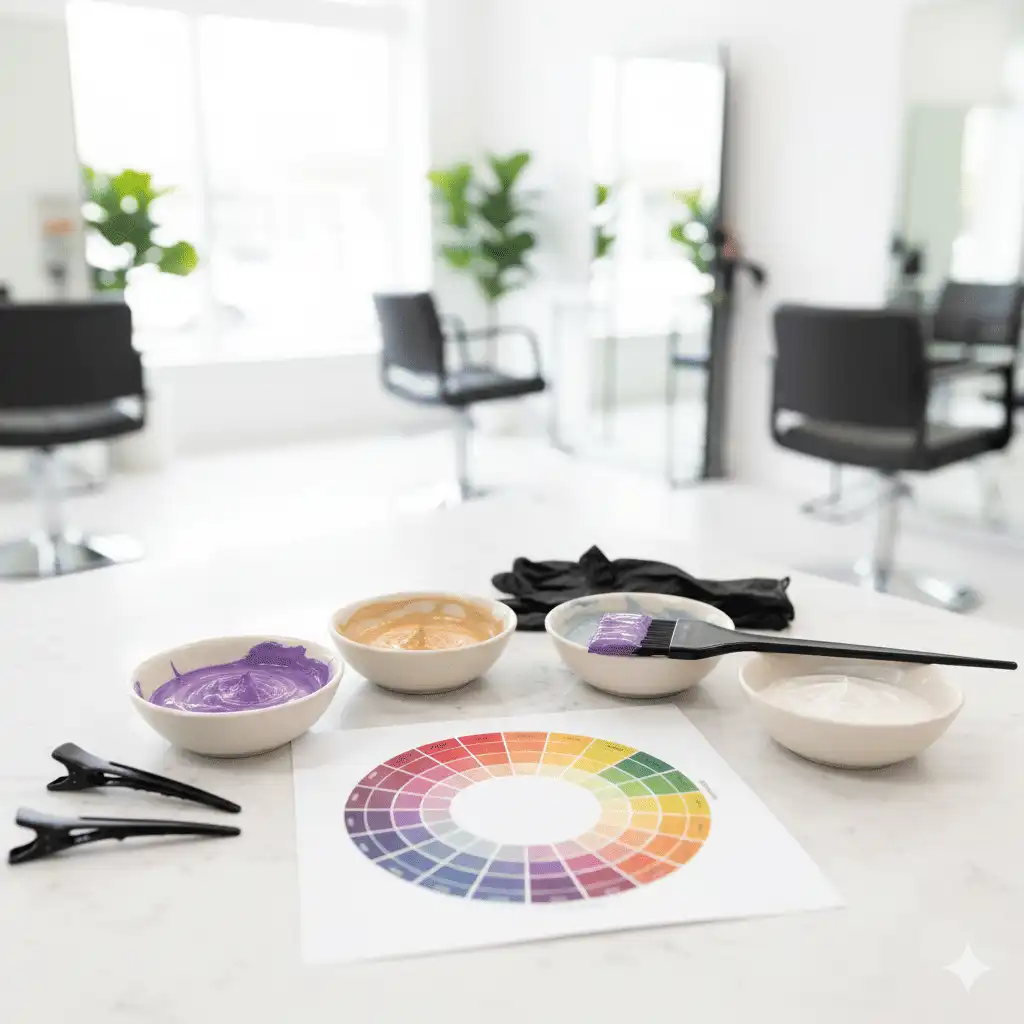
- Process: Using the Color Wheel (the colorist's basic tool), the opposite shade of the unwanted tone is applied. For example: if the hair is orange (warm), a blue or ash-based dye is used to neutralize it. Finally, the desired tone (blonde, brown, fantasy, etc.) is applied. ## Attention! The Importance of Hair Health A color correction is an intense chemical process. The integrity of your hair is the most important factor. ### Post-Correction Tips:
- Be Patient: A complex correction can take several hours or even multiple appointments to complete without damaging the hair.
- Invest in Care: Use reconstructive treatments (with proteins) and deep hydrating treatments (with oils/lipids).
- Professional Products: Use color-safe and sulfate-free shampoos and conditioners.
- Avoid Heat: Limit the use of flat irons, blow dryers, and curling irons to a minimum for the first few weeks. Visit our WebsideInstagram inspirationReady to Book?