


What is Balayage and Why is it So Popular?
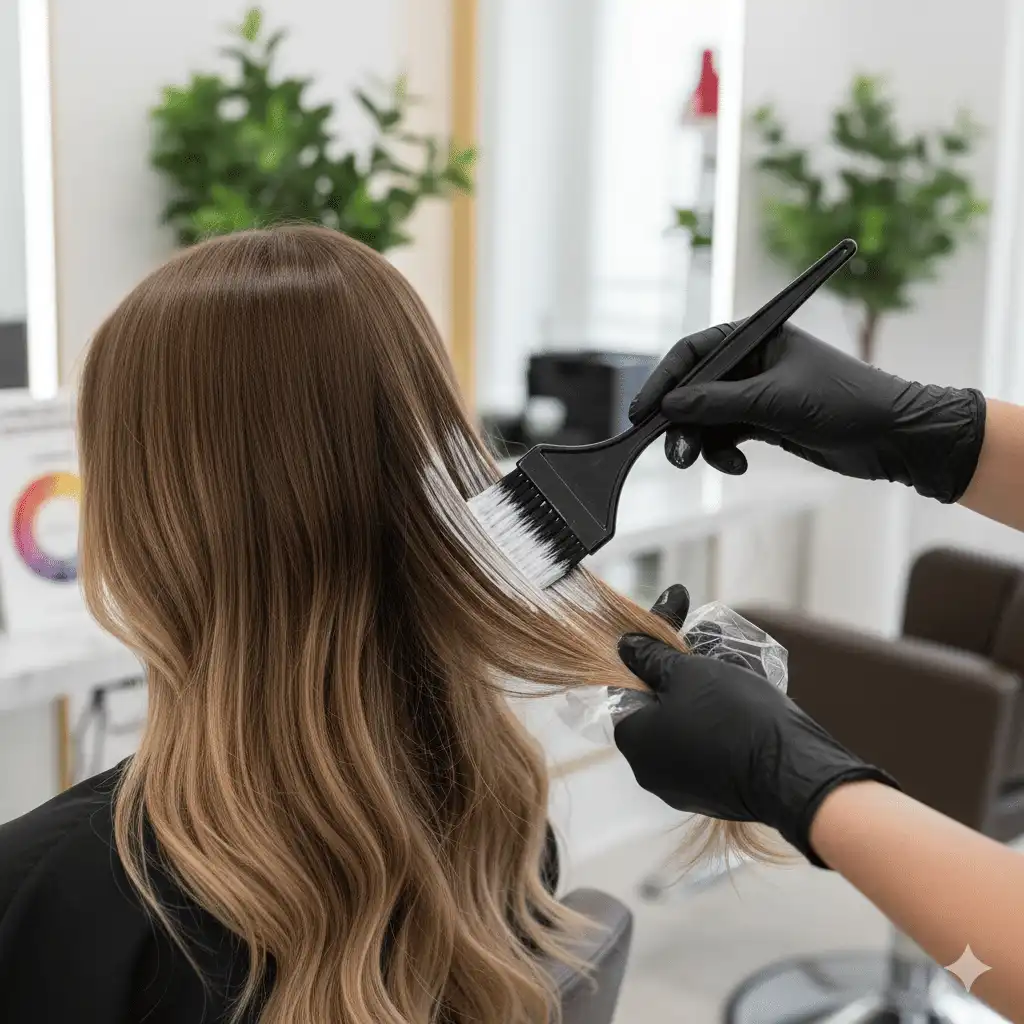
Balayage is a French coloring technique that means "to sweep" or "to paint." Unlike traditional highlights using foil, balayage is applied freehand, creating a soft, natural gradient, as if the sun had kissed your hair. There are no harsh lines or sharp contrasts; the color blends seamlessly from the root to the ends.
Key Characteristics of Balayage:
- Natural Look: The result is hair that looks subtly lightened, as if naturally sun-kissed.
- Low Maintenance: Since the color doesn't start at the root, growth is much less noticeable, allowing you to space out salon visits.
- Customization: It adapts to every hair type, skin tone, and personal style, offering a wide range of possibilities, from soft blondes to vibrant coppers or fantasy colors.
The Balayage Process: Freehand Magic
The key to a perfect balayage lies in the colorist's skill. Here are the general steps:
1. Consultation and Personalized Design
- Assessment: The stylist analyzes your hair base (natural or colored), its health condition, and your skin tone.
- Definition: Together, you decide the intensity of the lift, the desired tones (warm, cool, or neutral), and the strategic placement of the highlights to enhance your features.
2. Freehand Application (With or Without Foil)
- Traditional "Freehand" Technique: The colorist "paints" strategic sections of the hair with a brush, applying the lightener gradually. The application is more intense at the ends and softer towards the mid-lengths, avoiding the root. This creates the characteristic soft, graduated effect.
- Foil or Film Technique (Foilayage/AirTouch): Occasionally, especially when a more intense lift or greater definition is sought, foils or plastic film may be used. However, unlike classic highlights, these are placed in a freer, more strategic manner to maintain the blended effect and avoid harsh lines, not covering the root in the same way. This variation allows for boosting the balayage result.
3. Neutralization and Toning (The Final Touch)
- Toner/Gloss: Once the desired level of lightness is reached, the lightener is rinsed, and a toner or gloss is applied.
- Objective: The toner is crucial for eliminating any unwanted yellowish or brassy undertones and achieving the final desired shade (blonde, light brown, etc.), ensuring a clean and shiny finish.
Care and Maintenance for Long-Lasting Balayage
To keep your balayage vibrant and your hair healthy, at-home care is essential:
Essential Tips:
- Stylist-Recommended Products: To maintain the health and tone of your balayage, it is vital to use the at-home care products recommended by your colorist. They know exactly the tones and formulation your hair needs to preserve the color and integrity.
- Weekly Hydration: Apply moisturizing hair masks at least once a week to maintain elasticity and shine.
- Heat Protection: Always use a heat protectant before using tools like blow dryers, flat irons, or curling irons.
- Touch-ups: Although balayage is low maintenance, a touch-up is recommended every 3-6 months to refresh the color and the ends.
- Visit our websiteInstagram Book with Us